ILLINOIS BAJA · DRIVETRAIN ENGINEERING
2/4WD Dog Clutch
Redesign of the Illinois Baja 2/4WD engagement mechanism
OVERVIEW
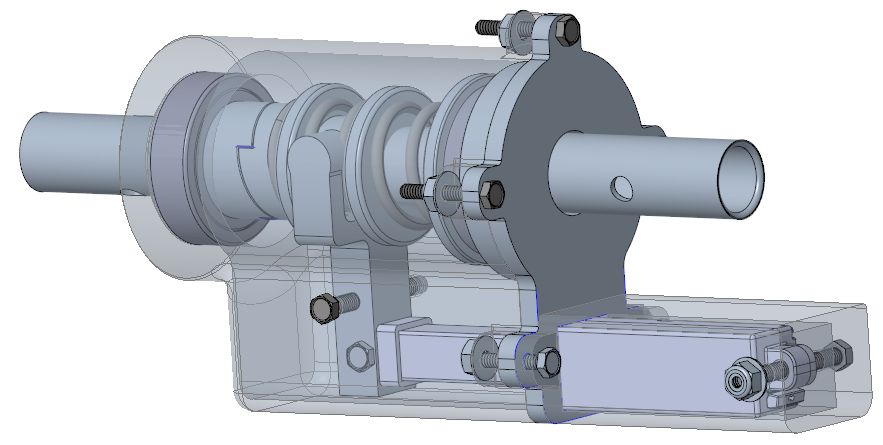
Throughout Fall Semester 2025, I worked on a 5-person team to refine and finalize the dog clutch CAD model to improve 4WD-to-2WD engagement reliability. We focused on dog tooth count and geometry, friction and load paths in the actuation fork, and wear between the actuator and shaft. The result was more reliable engagement and a more compact packaging design.
45%
Reduction in weight39%
Reduction in volume1.5×
Maximum expected load withstoodENGINEERING PROCESS
Dog teeth redesign
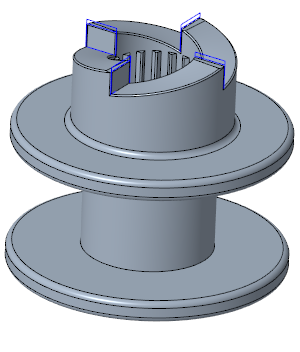
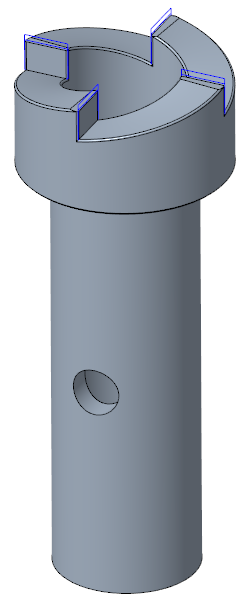
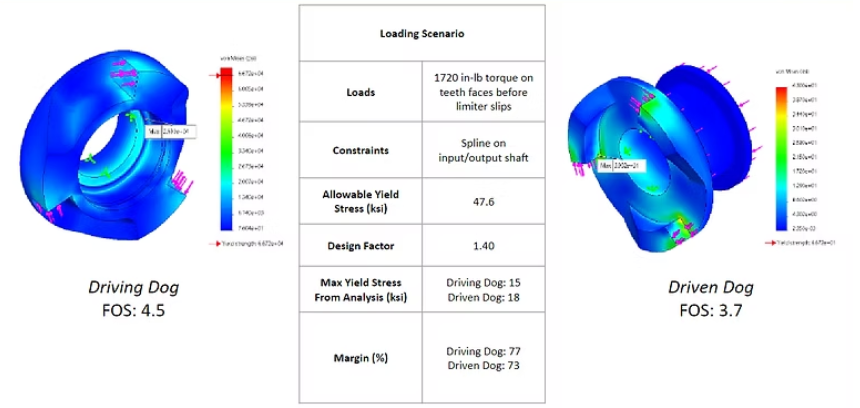
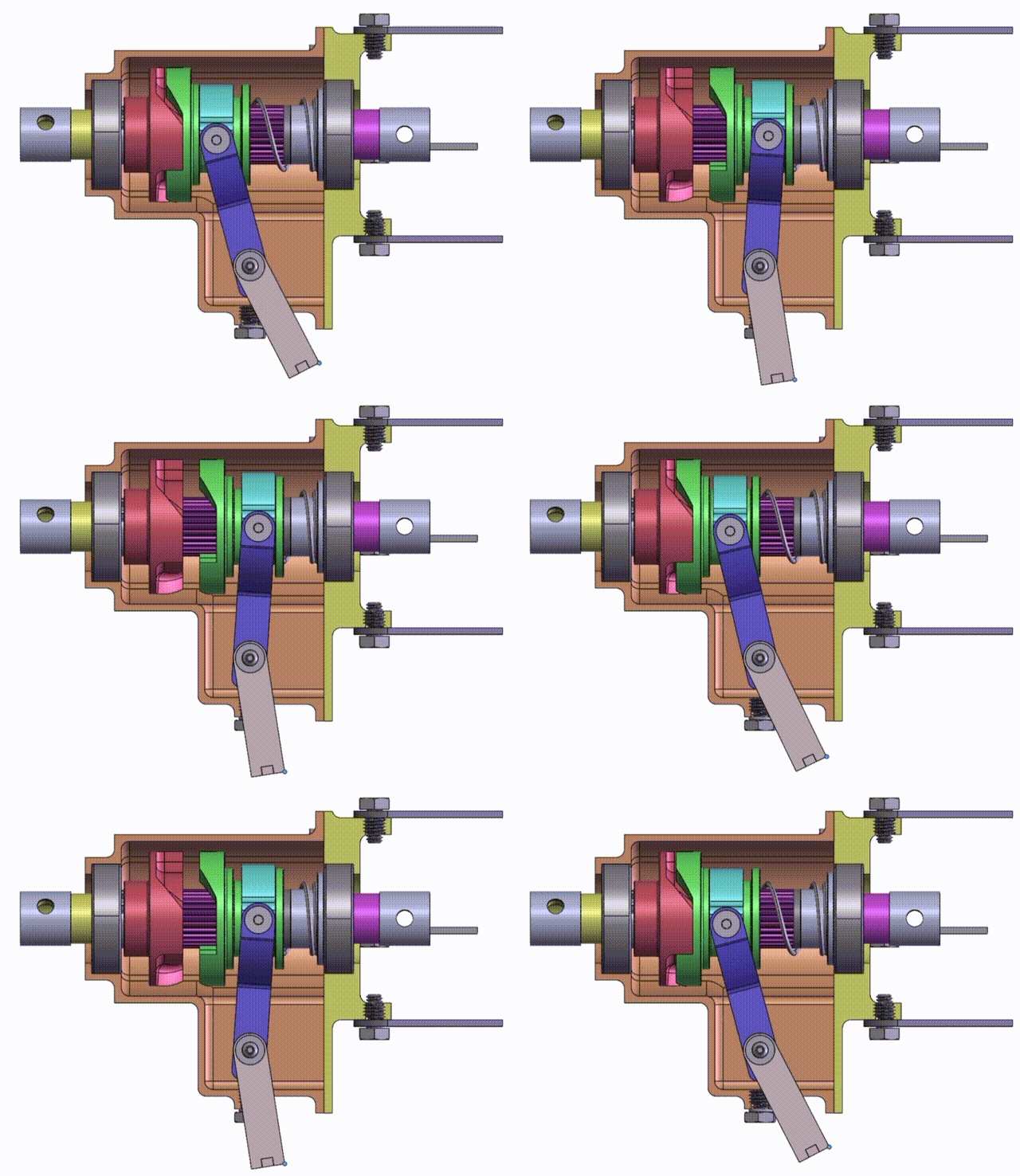
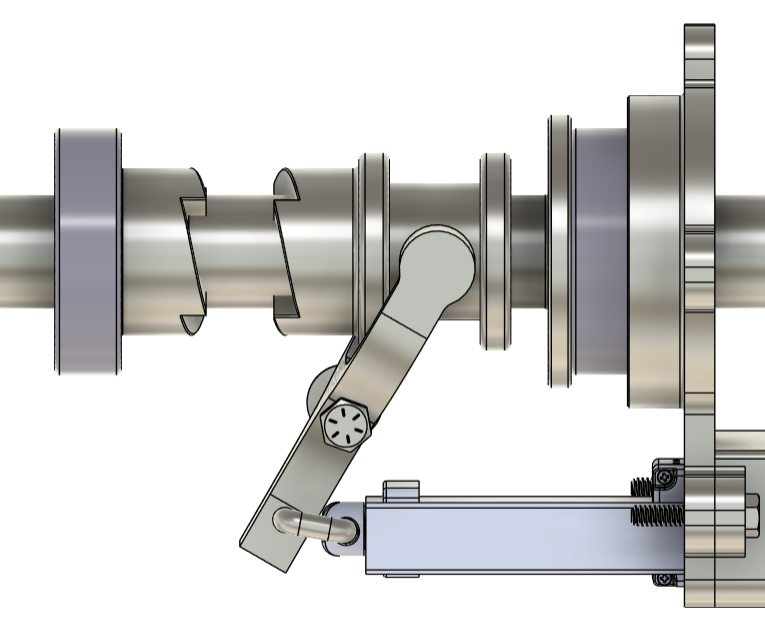
After finalizing our improvements to the actuation system, we focused on dog tooth count and geometry. Research and topology optimization led us to a curved four-tooth configuration, balancing stress reduction with reliable engagement.
Curved teeth allow for smooth engagement regardless of driveshaft speed differentials. We optimized the profiles with a 30° backlash angle to minimize lost motion and support precise, repeatable engagement under high-load conditions.
ENGINEERING PROCESS
Actuation fork redesign
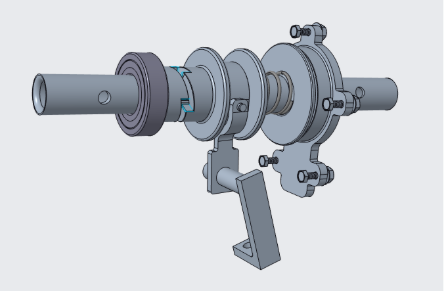
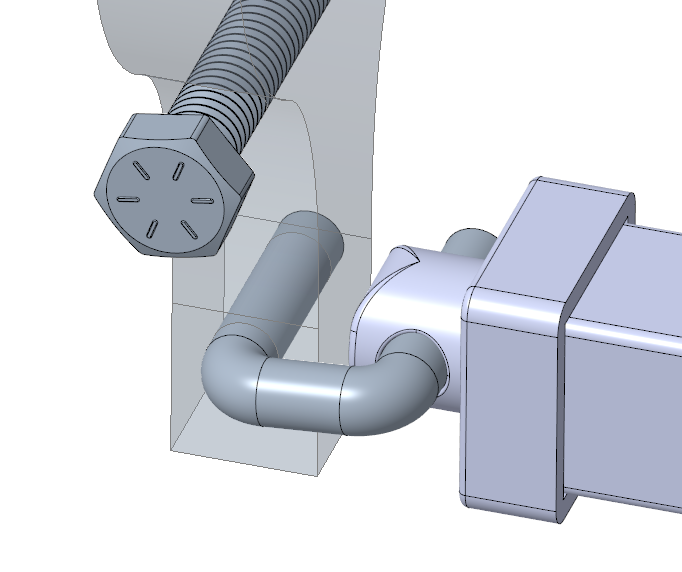
Our original setup relied on a single shear pin pulling one side of the teeth out of engagement to convert the drivetrain into 2WD. Finite element analysis and multibody dynamics simulations showed excessive stress under realistic resistance.
We redesigned the actuator fork with support ears on both sides of the bushing. This improved load distribution and reduced stress by approximately 50% relative to the original design. The spring mechanism forces the actuator into 4WD in the case of failure.
NEXT STEPS
Wear reduction
Our final focus was minimizing wear at the contact regions between the actuation fork and the dog clutch shaft, a common shortcoming identified in our research.
We proposed a thin brass or nylon sheet at the contact points to reduce wear without affecting engagement performance. This concept has not yet been tested and is planned for evaluation in the following semester.
NEXT PROJECT